

How to Tell Whether Your SEO Is Actually Working: 90-Day Review Framework
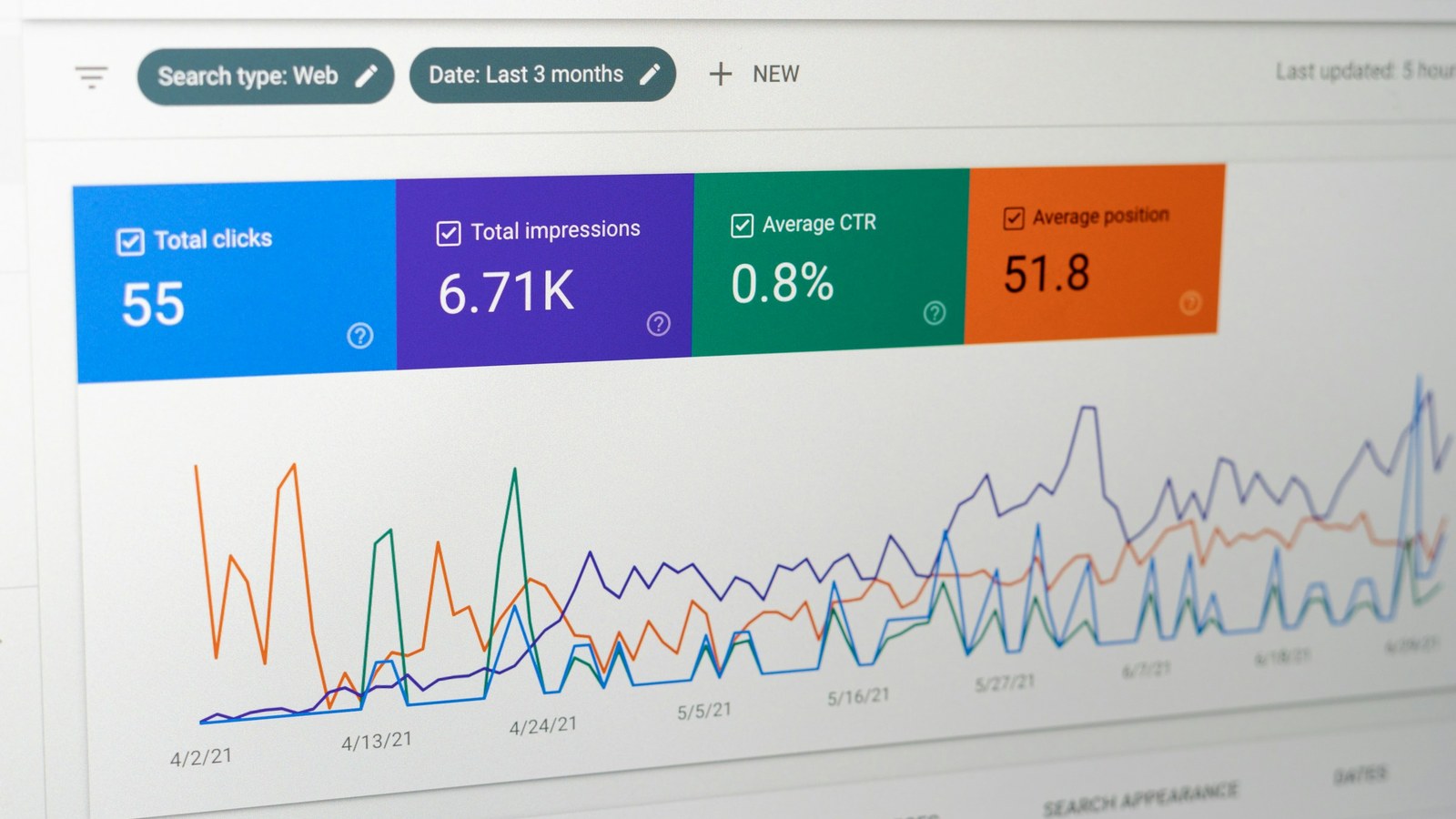
Overview
SEO reports can make almost anything look positive. Your agency may show more impressions, more keywords ranked, a higher Domain Rating, more backlinks, a ranking movement from position 68 to position 27. None of those things automatically mean SEO is working for your business.
SEO is working when it increases your visibility for commercially relevant searches, brings the right visitors to your website, and contributes to enquiries, sales, or qualified pipeline over time. The problem is that most business owners are shown activity metrics rather than decision metrics — and without the right framework, there is no reliable way to tell the difference.
This guide explains what to review after 30, 60, and 90 days of an SEO programme, and which numbers should make you confident, concerned, or ready to change strategy.
First: What Does 'SEO Working' Actually Mean?
The answer depends on your business model. For a local service business, SEO may be working when more people find you for service-and-location searches and submit enquiries. For an e-commerce business, SEO may be working when category and product pages attract qualified organic traffic that produces purchases. For a B2B company, SEO may be working when relevant decision-makers discover your expertise, request a proposal, or enter your sales pipeline.
The sequence that connects technical work to revenue follows a consistent logic:
- Technical access → Indexing → Visibility → Qualified traffic → Conversions → Revenue
You should not judge a new SEO programme only by the last stage in its first few weeks. But you also should not accept months of technical updates with no visible progress toward commercial visibility. Both extremes exist in the market, and the 90-day framework below is designed to distinguish a programme that is genuinely building toward revenue from one that is producing activity without direction.
If you are also running paid advertising alongside SEO, the question of which channel is producing qualified pipeline and which is producing volume without revenue becomes important early — the answer often changes how SEO priorities are set and what content is created first.
SEO vs Paid Ads: Which Is the Right Investment — when you need a clearer split between organic and paid contribution.
The Five SEO Metrics That Actually Matter
| Metric | What It Tells You | Why It Matters |
|---|---|---|
| Relevant organic impressions | How often your pages appear for meaningful searches | Shows whether Google is testing and surfacing your pages for real queries |
| Rankings for commercial keywords | Where you appear for searches connected to your services or products | Indicates potential to attract buyers — not just readers or researchers |
| Organic clicks and engaged sessions | Whether searchers choose your result and stay engaged after arriving | Shows whether your title, snippet and page answer the intent behind the query |
| Organic conversions | Enquiries, calls, purchases, demo requests or booked meetings from organic search | Connects visibility directly to business value |
| Share of revenue or pipeline influenced | Revenue generated or assisted by organic traffic | Shows whether the SEO investment is commercially justified |
Metrics such as total keyword count, backlink volume, and total impressions can be useful diagnostics — they tell you something is happening. They should not be the only headline in your monthly report, because they can all increase while commercial outcomes stay flat or decline.
What You Should See After 30 Days
In the first month, the goal is not large traffic growth. The goal is to confirm that the site is technically accessible, the strategy is aimed at real opportunities, and the foundations are in place for the work that follows.
A useful first-month review should answer:
- Has the website been crawled and indexed correctly, and are there any critical blocking issues?
- Are important pages blocked by robots.txt, noindex tags, duplicate URLs, or redirect errors?
- Has keyword research identified service, product, industry, and location searches that real buyers use?
- Are the most important landing pages mapped to a defined search intent?
- Has conversion tracking been verified — can organic visits be connected to form submissions, calls or purchases?
- Has a content plan been created that connects to commercial pages, not just blog topics?
- Are key pages technically usable and fast on mobile, where most search traffic arrives?
Warning Signs at 30 Days
No measurement access
No access to Google Search Console or GA4, or no explanation of what the data shows.
No target keywords
No specific target keywords or intent mapping — only generic categories.
Blog topics without commercial path
Blog topics chosen without any connection to service pages or conversion paths.
No conversion tracking review
No conversion tracking review or verification of what is currently being measured.
No technical prioritisation
No technical audit or explanation of which issues have been prioritised and why.
Backlinks as the full strategy
'We are building backlinks' presented as the complete strategy.
No baseline
No baseline established for organic leads, calls, form completions or revenue.
SEO work takes time to produce visible results in traffic and rankings. Lack of clarity about what the programme is targeting and why should not take time. If those answers are not available at 30 days, the problem is not patience — it is direction.
What You Should See After 60 Days
By the second month, early search signals should be visible even if commercial traffic is still modest. These early indicators confirm that the strategy is being executed and that Google is responding to changes on the site.
Look for:
- More indexed pages for the strategic topics the programme is targeting
- Impression growth for target queries in Google Search Console
- Improved average position for priority pages, even if still outside the top 10
- New long-tail keyword visibility for topic clusters the programme has addressed
- Better internal linking between blog content, service pages and conversion pages
- Early increases in organic clicks for pages that have been directly optimised
- Technical fixes completed or actively in progress, with documented outcomes
This is also the point where you should assess whether the content being created actually targets the searches your buyers use. A blog post can attract traffic and still fail commercially if it answers a question that has no connection to your services or the problems your buyers are trying to solve.
The Intent Gap: Traffic That Cannot Convert
A web development agency could create content targeting 'What is HTML?' — a high-volume query. But the person searching that question is unlikely to be evaluating agencies to build their business website.
A better commercial opportunity is a search like 'Why is my website getting traffic but no leads?' — that comes from someone who has a specific business problem the agency is equipped to solve. The question itself implies readiness to take action.
This is the intent distinction that separates traffic from qualified pipeline. Weak landing-page conversion increases cost per acquisition and reduces the value of both organic and paid traffic — and the same principle applies to SEO content: a page that attracts visits but does not match the intent of a buyer in a decision phase cannot convert regardless of how well it ranks.
How Landing Page Conversion Rate Affects Your Cost Per Acquisition — when traffic arrives but does not turn into enquiries or sales.
What You Should See After 90 Days
By 90 days, your SEO programme should have enough data to make evidence-based decisions about what is working, what is not, and where the next three months of effort should be directed.
You should be able to review:
- Which pages are gaining impressions and clicks, and for which specific queries
- Which commercial search terms are moving upward in position
- Which content is attracting relevant search demand that connects to your services
- Which pages have poor click-through rates despite ranking — a title and meta description problem
- Whether organic visitors are completing conversion actions or leaving without engaging
- Where users are dropping off in the site experience after arriving from organic search
- Which pages need stronger internal links, clearer copy or better conversion elements
- What the specific 90-day priorities are for the next quarter
For established domains in competitive industries, page-one rankings and meaningful revenue contribution may take longer than 90 days. That is a real constraint, not a qualification. But the programme should be visibly moving in the right direction — with evidence in Search Console, not just in the agency's monthly narrative.
If there is no meaningful improvement in indexing, impressions, rankings for relevant terms or page quality after three months, the problem needs investigation — not further patience.
Rankings Alone Are Not Enough
A page ranking in position 3 can still produce poor commercial results if the keyword has low buying intent, the title does not earn clicks in the search results, the page does not match what the searcher is actually looking for, the call to action is unclear or absent, or the website itself is slow or hard to use on mobile.
If organic visitors are arriving on well-ranked pages and leaving without taking any action, the problem is on the page rather than in the rankings. A high bounce rate on pages that receive organic traffic is one of the clearest indicators that the page is not matching what the searcher expected — either because the content does not answer the query, the page loads too slowly, or the visitor cannot quickly identify what to do next.
SEO without conversion-rate consideration produces rankings that cannot be monetised. That is why the website, the content quality, the page experience, and the conversion path all have to work together with the SEO strategy — not as separate workstreams with separate agencies and separate measurement.
Why Is My Website Bounce Rate So High? — when organic visitors arrive and leave without engaging.
How to Review Your SEO Report Properly
When you receive a monthly SEO report, the following questions distinguish a report that tells you something useful from one that presents activity without accountability.
1. Which Target Searches Improved?
Do not accept a large keyword list without commercial context. For each keyword showing movement, ask: what is the priority commercial keyword, what is its current position and movement, which URL is ranking for it, what is the search intent behind the query, and does this keyword support a service, product, or conversion path — or is it informational content with no connection to revenue?
2. Which Pages Gained Qualified Traffic?
Which pages received more organic clicks this month? What queries brought people to each page? Were those queries relevant to the business's commercial offer? Did the visitors who arrived engage, submit an enquiry, or take any conversion action? A report that cannot answer these questions is reporting traffic volume, not marketing performance.
If your current reports do not cover these questions, what a good SEO report actually looks like — including which metrics belong in the headline view and which are diagnostic detail — gives you a specific framework to use when reviewing your agency's work or asking for better reporting.
What a Good SEO Report Actually Looks Like — headline metrics vs diagnostic detail for agency reviews.
3. What Was Changed, and Why?
A useful report explains decisions with reasoning, not just activities completed. For example: 'We improved this service page because it had high impressions but a 1.2% click-through rate — significantly below the average for this position range.' Or: 'We added internal links from three blog articles because this service page was receiving no organic traffic despite being technically indexed.' The reasoning matters because it is how you evaluate whether the right decisions are being made, not just whether work is being done.
4. What Will Happen Next Month?
Good SEO is iterative and should be explicitly planned. Your agency should be able to state which pages will be improved, which content will be published and why, which technical issues are next in priority order, which conversion improvements will be tested, and what success will look like at the end of the next reporting period.
Common SEO Reporting Mistakes That Obscure Real Performance
Reporting Total Impressions Without Query Quality
Impressions can increase because your site is appearing in irrelevant searches, informational queries, navigational queries for other brands, or searches with no commercial intent. Total impressions are a useful diagnostic, not a headline metric. The queries driving impressions are what matter.
Celebrating Keyword Movements Outside the Top 20
A move from position 80 to position 35 may indicate Google is testing the page for that query. It is not yet a commercial outcome. Positions 11 through 20 attract very low click-through rates. Meaningful organic traffic typically begins in the top 7 to 10 positions for competitive commercial queries, and concentrates heavily in positions 1 through 3.
Publishing Blog Content With No Internal-Linking Plan
An article that ranks for an informational query but has no internal links to relevant service pages, contact pages or conversion paths cannot contribute to commercial outcomes. It attracts a visitor and then offers them no clear next step connected to the business. Every piece of content should have a defined role in the site's internal architecture, not just a ranking target.
Treating Backlinks as the Entire Strategy
Links from external sites can support rankings when the page they point to is genuinely useful and technically sound. They cannot compensate for content that does not answer a real query, a poor page experience, missing commercial landing pages, or a website that converts poorly once visitors arrive. A link-building programme without corresponding content and conversion work often produces rankings that do not translate to revenue.
Ignoring Conversion Tracking
If you cannot see whether organic visitors submit a form, call, make a purchase or book a meeting, you cannot judge the business value of your SEO investment accurately. Conversion tracking is not a bonus — it is the minimum requirement for managing SEO as a revenue channel rather than a visibility exercise.
SEO and AI Search Visibility
Many businesses now ask whether they need a separate strategy for appearing in AI Overviews, AI Mode and other AI-generated search features. The honest answer is that the foundation is the same as it has always been: publish useful, reliable content that answers real questions clearly, make it indexable, use understandable page structure, and connect relevant pages with internal links.
Google states that pages eligible to appear in normal search results can also appear as supporting links in AI Overviews. It does not require separate technical markup or AI-specific files for eligibility. The implication is that optimising for human readers who have a real decision to make — rather than generating volume content designed to match query strings — is the approach that serves both traditional search and AI-featured appearances.
For businesses that want to understand how answer engine optimisation differs from traditional SEO and what it practically requires at the content and structure level, the distinction matters most for businesses in considered-purchase categories where AI overviews now appear before the organic results for decision-stage queries.
Answer Engine Optimization (AEO) Guide — how AI citation differs from classic rankings, and what to change in content structure.
A Simple 90-Day SEO Scorecard
Use this at the end of each monthly review period to assess whether your programme is moving in the right direction.
| Question | Status |
|---|---|
| Do we know our priority commercial keywords and which pages are targeting them? | — |
| Can we see organic leads, calls, purchases or booked meetings in our analytics? | — |
| Are important service and product pages indexed and technically healthy? | — |
| Are relevant impressions and clicks increasing over time? | — |
| Is the content being published tied to customer problems and buying intent? | — |
| Do blog articles link naturally to commercial pages and useful next steps? | — |
| Does the monthly report explain decisions and their reasoning, not only activities? | — |
| Is there a specific, justified plan for the next 30 days? | — |
If most answers are uncertain or no, your SEO is probably not being managed as a revenue channel. The next question is whether the issue is strategy, execution, content quality, website performance, or a combination — and answering that question requires looking at the full picture: traffic, rankings, conversion data, page quality and the commercial intent of what is being targeted.
If the scorecard reveals consistent gaps in what your current SEO programme is producing, how to choose a digital marketing agency covers what to look for, what to ask for before signing, and what reporting standards and strategic clarity you should expect from any agency managing your organic search.
How to Choose a Digital Marketing Agency — reporting standards and strategic clarity before you sign.
Need an SEO Review That Connects to Revenue?
Svype builds SEO strategies around business problems, commercial search intent, conversion tracking and the pages that actually influence enquiries and sales — not keyword counts and Domain Rating.
Talk to Svype about an SEO and conversion audit — start with a clear view of what is and is not working.
Svype SEO Service for organic search built around commercial intent and measurable pipeline.
Timelines, ranking expectations and commercial outcomes referenced in this article are illustrative of typical SEO programme progression. Actual results depend on domain authority, competitive landscape, content quality, technical health and conversion factors specific to each business.